
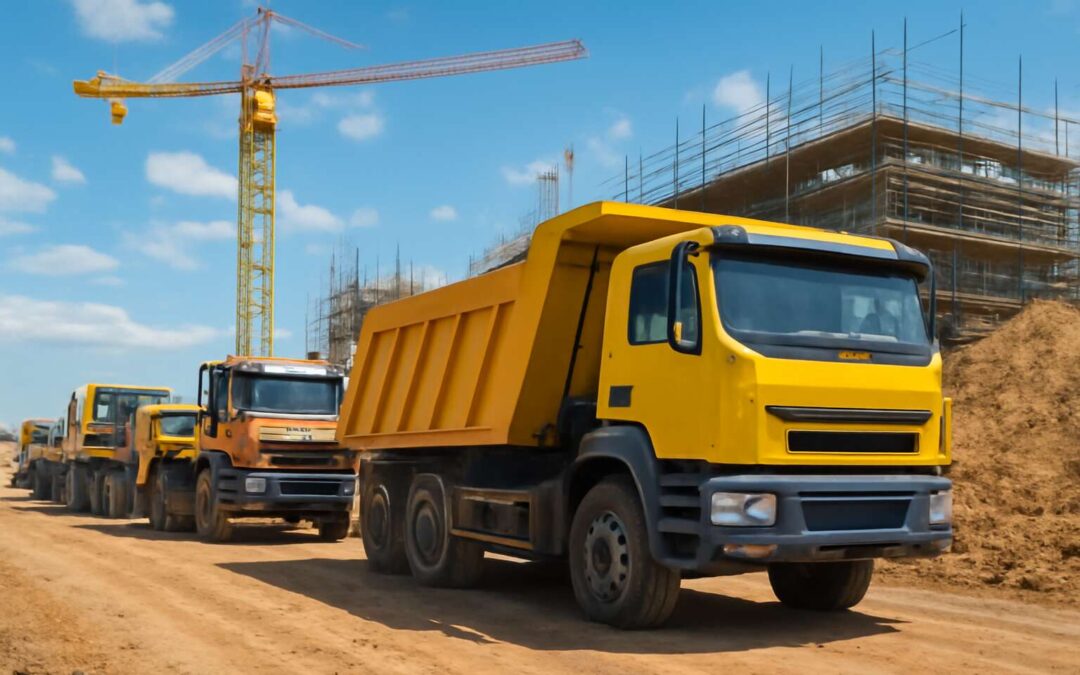
Truck Types for Construction Projects
Dump Trucks for Site Work
On South Africa’s bustling build sites, progress is measured not by hours but by the cadence of reliable trucks. A sharp-witted foreman once reminded me, “the right dump truck can bend a stubborn schedule toward sunrise.” In the realm of construction trucks, the dump truck stands as a steadfast messenger through dust and steel!
Dump trucks for site work shoulder heavy loads across uneven terrain, from gravel-access roads to clay-rich cuttings. Choose diesel displacement, payload, and tipping height that align with site access and dump sites. In South Africa, robust off-road capability and safety features keep personnel safe while moving material swiftly.
Within this category, consider a few dependable configurations:
- Standard tipper
- Articulated dump trucks
- Off-road rigid dump trucks
Concrete Mixers and Cement Trucks
On South Africa’s bustling building sites, progress doesn’t drift—it’s measured by how quickly the drum keeps turning. A sharp foreman once quipped, “When the mixer runs, the line moves.” Concrete mixers and cement trucks are the steady heartbeat of any pour.
Concrete Mixers, a staple of construction trucks, come in transit and volumetric varieties. Transit mixers offer a reliable, steady discharge for standard pours, while volumetric trucks batch on-site to match precise mix designs. This flexibility helps adapt to changing site conditions without waiting for a fresh truck.
- Transit mixers on rigid trucks: predictable drum capacity and mix time
- Volumetric mixers: on-demand batching and reduced waste
Cement trucks deliver dry material to the mixer or concrete pump, with features like integrated weighing, efficient chutes, and wash-out systems to keep sites clean and safe. In a country like SA, reliable delivery from construction trucks keeps foundations solid and crews moving, even when delays loom elsewhere.
Water Trucks and Dust Control
Dust is not just a nuisance on South Africa’s busy sites; it’s a safety risk that rides the wind. Among construction trucks, water trucks stand as the quiet, dependable guardians of visibility, keeping crews safe and pours on track. A foreman once said, “When the mist settles, the line moves.”
These mobile guardians haul vast tanks—often 8,000 to 20,000 litres—paired with adjustable spray booms and high-flow nozzles. They’re deployed for both passive dust suppression and active congestion management around stockpiles, access roads, and concrete pours. In South Africa’s demanding climate, rate of spray and water efficiency can stretch a shift and win back minutes that wind and traffic steal.
Key features to look for include:
- variable spray patterns and boom reach
- eco-friendly water use and runoff controls
- quick refilling and reliable filtration
When these elements come together, construction trucks breathe easier—keeping sites calmer and moving forward with purpose.
Material Haulers and Site Support Trucks
On a South African jobsite, progress rides on something quieter than diesel: timing. Up to 28% of on-site delays trace to material transport and logistics. A foreman whispered, “When the freight moves, the line moves.” These construction trucks are the quiet guardians of momentum, turning potential holdups into steady pours and real progress.
Material Haulers, a category of heavy-duty trucks, shoulder bulk loads—sand, gravel, bricks, steel mats—with rugged frames built to endure. They optimize payload, deck height, and traction so a tight Cape Town site never stalls the workflow. These movers translate stockpiles into usable progress on the line.
Site Support Trucks keep the backbone supple—fuel and lube units, mobile workshops, tool carriers, and service vans that spark-ready equipment and safe crew movement. When these movers collaborate with material haulers, the site breathes and the schedule sharpens. The synergy sets the tempo of every pour and lift.
Key Features and Specifications
Engine Power and Torque
On South Africa’s rough sites, studies show that fleets embracing engines with torque delivered early can shave cycle times by up to 15%. These machines—construction trucks—must blend raw power with precise control; they climb, move, and position loads with a quiet, relentless rhythm. Torque at low RPM is not a luxury; it’s a safeguard!
- Power range: 250–600 kW (varies by model and duty).
- Peak torque: 1800–4000 Nm at 900–1200 rpm.
- Drivetrain: 6×4 or 8×4 configurations; automated or manual transmissions.
- Transmission options: 6–12 speed automatics for smoother shifts.
Engine power and torque curves in South Africa are shaped for heat, dust, and climbs, ensuring performance across terrain without compromising fuel efficiency or operator comfort.
Payload Capacity and Stability
On South Africa’s rough sites, these machines don’t just haul; they negotiate hills, dust, and deadlines with a quiet, relentless rhythm. Fleets embracing torque delivered early shave cycle times by up to 15%—proof that power must arrive with precision. These construction trucks blend raw strength with graceful control, climbing, moving, and placing loads with confidence.
- Payload capacity: models span roughly 20–60 tonnes depending on 6×4 vs 8×4 and body configuration.
- Stability systems: wide stance, dynamic stability control, and load-sensing hydraulics for level handling on ramps.
- Power delivery: torque curves optimized for low RPM, ensuring smooth starts in dusty conditions.
These traits translate into safer, steadier performance on hot, rocky sites, maximizing uptime without sacrificing fuel efficiency or operator comfort.
Drivetrain Configurations and Traction
On South Africa’s rough sites, momentum is more than pace; it’s survival. A recent fleet pulse shows uptime rising up to 15% when torque lands early and holds steady in construction trucks. I’ve watched these machines carve through dust and heat with a quiet, relentless rhythm.
Key features and specifications reveal a philosophy of control—drivetrain configurations that matter: 6×4 and 8×4 layouts, long wheelbases for stability, and heavy-duty differentials that share the load. Traction is governed by dynamic stability control and load-sensing hydraulics that keep feet firm on ramps and grades.
- 6×4 and 8×4 configurations to match load and terrain
- Dynamic stability control and load-sensing hydraulics for level handling on ramps
- Low-RPM torque curves for smooth starts in dusty conditions
That combination translates into safer, steadier performance on hot, rocky sites, maximizing uptime and comfort while preserving fuel efficiency.
Hydraulic Lifting Systems
On South Africa’s rough sites, hydraulic lifting systems turn rough work into precise ballet. I’ve watched construction trucks rise and settle with a measured grace, even as dust swirls and heat climbs. That rhythm translates to safer unloads, quicker cycles, and a steadier hand on every grade.
At the heart of these systems lie rugged cylinders, smart valves, and load-sensing hydraulics that tune lift speed to the weight in the basket.
- Load-sensing hydraulics create proportional, steady lift
- Position feedback sensors for exact extension
- Controlled damping for smooth retraction
- Return-to-stowed safety and mechanical locks
Anti-cavitation design and tough seals resist dust and heat, preserving performance with minimal maintenance. The hydraulic lifting system becomes the quiet backbone of the job—keeping momentum, comfort, and efficiency in balance as the day unfolds.
Popular Models and Use Cases
Dump Trucks in Road and Civil Projects
Road and civil projects hinge on reliable, tireless partners—the dump trucks that ferry bulk loads across challenging terrain. For construction trucks shuttling between quarries and site fronts, every load tells a story. ‘Every load carries a plan,’ a veteran operator says, and the rhythm of the convoy proves it true.
Popular models for road and civil work include heavyweights: Caterpillar 773G, Volvo A60H, Komatsu HD785, and Bell B40E. They deliver high payloads, stability, and road-ready performance.
- Rigid dump trucks for long-haul loads on road works
- Articulated dump trucks for rough terrain and quick turns
- Efficient designs tuned for hot South African climates
These construction trucks power embankment builds, bridge approaches, and tunnel access points, moving material with precision so crews stay on schedule. In South Africa’s demanding environments, selecting a model that balances payload, traction, and maintenance cycles is essential.
Concrete Mixers and Cement Trucks in Construction
On South African sites, the rhythm of concrete pours is set by a single, steadfast drum—the concrete mixer. These construction trucks translate gritty sand and cement into solid mass, and operators report cycles that run faster when the unit is clean, calibrated, and ready to roll—sometimes by 20%.
Popular models for concrete mixers and cement trucks include Volvo FMX and Mercedes-Benz Actros configurations for urban pours, with Iveco Eurocargo fitting tight sites. For on-site batching, volumetric mixers from RexCon and Cemen Tech bring precise control, reducing waste and easing maintenance cycles.
- Urban pours with compact 6×4 mixer configurations
- On-site volumetric batching for immediate quality control
- Precast yard workflows using long-reach mixer setups
These realities shape how construction trucks move mass across South Africa’s challenging landscapes.
Vacuum and Hydrovac Trucks for Excavation
Hydrovac and vacuum trucks have quietly become the sugar in the porridge of excavation—precise, clean, and unafraid of subsoil goblins. On South African sites, these rigs slip through tight urban corridors with minimal disruption, delivering daylighting control and gentle soil handling. Popular models emphasize compact chassis and strong suction, tuned for utility locating, trenching auxiliaries, and fast cleanups. In the world of construction trucks, the blend of mobility and finesse is hard to beat.
Use cases are as varied as the dust in a windstorm:
- Utility potholing and daylighting to expose pipes without service damage
- Trench preparation and conduit installs with controlled material removal
- Soil loosening and debris extraction for delicate substrates
Across South Africa’s landscapes, these trucks prove their worth by turning risky digs into measured, malleable operations—quiet, powerful, and profoundly practical.
Water Trucks and Dust Suppression on Site
On South Africa’s bustling sites, water trucks slash dust by up to 80% on hot days, turning chaos into a steady rhythm. In the realm of construction trucks, these machines blend utility with restraint, gliding through tight streets with minimal disruption and maximum effect.
- AquaFlow Sentinel — 4000 L tank, precision nozzles, variable spray for exact moisture control
- DustGone Meteor — foam-capable option for rapid suppression on loose substrates
- HydroSprint Compact — 2500 L capacity with 4×4 traction for rugged urban routes
Use cases are as varied as the dust itself: controlling visibility on haul roads, preparing yards before pours, and protecting subsurface work while trenching crews move in with care.
From the field, I watch these quiet custodians convert rough days into reliable ones—one measured spray at a time.
Safety, Compliance, and Maintenance
Operator Training and Certification
On South African construction sites, a single lapse behind the wheel can ripple through the day. A recent audit notes incidents drop when operators hold current certification—proof that training pays. When we speak of construction trucks, safety is the first language of progress.
Safety begins with ritual pre-use checks and a disciplined routine. Operators stay alert to blind spots, keep seating, mirrors, and load paths clear.
- Pre-use inspections and daily checks
- Load securing and stability awareness
- Emergency procedures and incident reporting
- Fatigue management and ergonomic practices
Compliance threads through licensing, operator logs, and vehicle maintenance records, aligned with OH&S expectations. Certification and refreshers ensure competence keeps pace with new attachments, terrains, and environmental rules affecting every shift.
Maintenance of skill mirrors maintenance of machine: ongoing operator training and certification sustain reliability and uptime on site.
Onboard Safety Features and PPE
On South African sites, a single lapse behind the wheel can ripple through the day—audit data reveals incidents drop by 34% when operators stay current with certification. In the half-light before dawn, safety speaks first for construction trucks, a pact sealed with every pedal press and careful watch.
Onboard safety features and PPE become ritual: ROPS frames, seat belts, backup alarms, and cameras stand as sentinels; PPE—hard hats, hi-vis, sturdy boots, and ear protection—shields the crew from the unseen. I sense compliance tighten as daily checks affirm readiness.
- Onboard safety systems: ROPS, belts, alarms, cameras
- PPE: hard hats, hi-vis, boots, ear protection
- Maintenance cadence: daily checks of brakes, lights, and signals
Maintenance of these safeguards mirrors the machine’s heartbeat—steadfast, unseen, and essential for steady uptime on every site, a vow spoken by these construction trucks themselves.
Inspection Checklists and Preventive Maintenance
One lapse behind the wheel can ripple through the day, and audit data shows incidents drop by 34% when operators stay certified. On site, safety and accountability fuse into a ritual that powers every shift for construction trucks.
Safety, compliance, and readiness ride on tight checklists.
- Pre-shift safety affirmation
- Documentation and permit verification
- Environmental and site-specific controls
- Preventive maintenance scheduling
These routines keep morale high and disruptions low.
Maintenance inspection checklists and preventive maintenance are the heartbeat—capturing faults, flagging service windows, and ensuring a steady uptime. A simple log travels with each machine, harmonizing workflow across South African sites and the rhythm of construction trucks.
Regulations, Emissions, and Compliance Standards
On South African worksites, safety and compliance are not mere formalities but the ballast that keeps construction trucks upright amid dust and deadlines. In practice, a well-audited fleet runs leaner; audits show incidents drop decisively when operators stay certified and reports are current.
Emissions and compliance standards aren’t optional luxuries; they are the cockpit instruments. The right checks ensure that engines breathe cleanly, and fleets stay within legal limits while preserving performance. The following elements anchor this discipline:
- Emissions controls and engine management aligned with local standards
- Regulatory reporting and audit trails for inspections and maintenance
- Maintenance scheduling harmonised with compliance requirements
Maintenance regulations keep the heart of the machine beating with punctuality—recorded services, transparent fault logs, and accountability that travels with each unit across sites. Without this rhythm, even the most capable trucks falter, and morale wobbles as piles grow and permits lag.
Buying Guide and Fleet ROI
Total Cost of Ownership and Lifecycle Costs
South Africa’s construction sites are busy theatres of throughput. Fleets that prioritise Total Cost of Ownership report up to 20% lower annual costs, turning upfront price into steady, predictable performance. In this buying moment, construction trucks must balance initial cost with long-term reliability and serviceability.
Buying Guide essentials include engine options, uptime potential, and resale value.
- Fuel efficiency and maintenance costs
- Dealer support and parts availability
- Residual value and warranty terms
Lifecycle costs extend beyond depreciation to downtime, insurance, and storage. When viewed through a fleet ROI lens, this broader picture underscores why local dealer networks and service intervals matter just as much as horsepower and payload.
Leasing vs Purchasing for Construction Fleets
Across South Africa’s construction sites, the rhythm of progress is measured in metal and cost. A strategic choice between leasing and purchasing can turn a hefty upfront price into steady throughput, especially when the road ahead is dusted with uncertainty.
Leasing offers cash-flow clarity, ring-fenced maintenance, and a built-in refresh cycle, while purchasing keeps ownership on the balance sheet and preserves capital for other needs. Fleet ROI tilts with contract terms and end-of-life options, shaping risk as much as reward.
- Cash flow flexibility
- Predictable maintenance coverage
- End-of-lease refresh or resale options
Whether the choice leans toward a nimble lease or a measured purchase, the decision reverberates through dealer networks and parts availability, turning every mile for construction trucks into a measured, ritual progress across South Africa’s landscapes.
Warranty, Parts Availability, and After-Sales Support
Across South Africa’s dusty horizons, every mile of a construction truck carries a choice as deliberate as a drumbeat. “Reliability is the loudest instrument on a site,” a veteran foreman told me, and his words echo through our fleet.
- Warranty coverage that travels with the vehicle, not buried in fine print
- Genuine parts availability and shorter lead times to keep fleets moving
- Accessible After-Sales Support with a regional network and rapid response
In a Buying Guide for construction trucks, warranty terms and end-of-life options shape Fleet ROI as much as upfront price. With steady parts availability, uptime grows and total cost of ownership falls.
After-Sales Support that adapts to your schedule keeps momentum alive on South Africa’s sites.
Fleet Telemetry, Tracking, and Maintenance Planning
In South Africa’s harsh sites, telemetry and maintenance planning tilt the odds in a long, grueling day. Fleets that treat data as decision-making fuel report double-digit uptime gains. “Reliability is the loudest instrument on a site,” a veteran foreman said, and that truth rings through every choice about construction trucks. In this buying guide, fleet ROI hinges as much on planning accuracy as on upfront price.
- Real-time telemetry and tracking to maximize asset utilization
- Predictive maintenance with lead-time aware scheduling
- Central dashboards for budgeting, compliance, and lifecycle planning
When maintenance planning is integrated with procurement, downtime becomes a predictable cost, not a random hit. For construction trucks, that means steadier schedules, better utilisation, and a lifecycle that aligns with project timelines rather than chasing them.
