
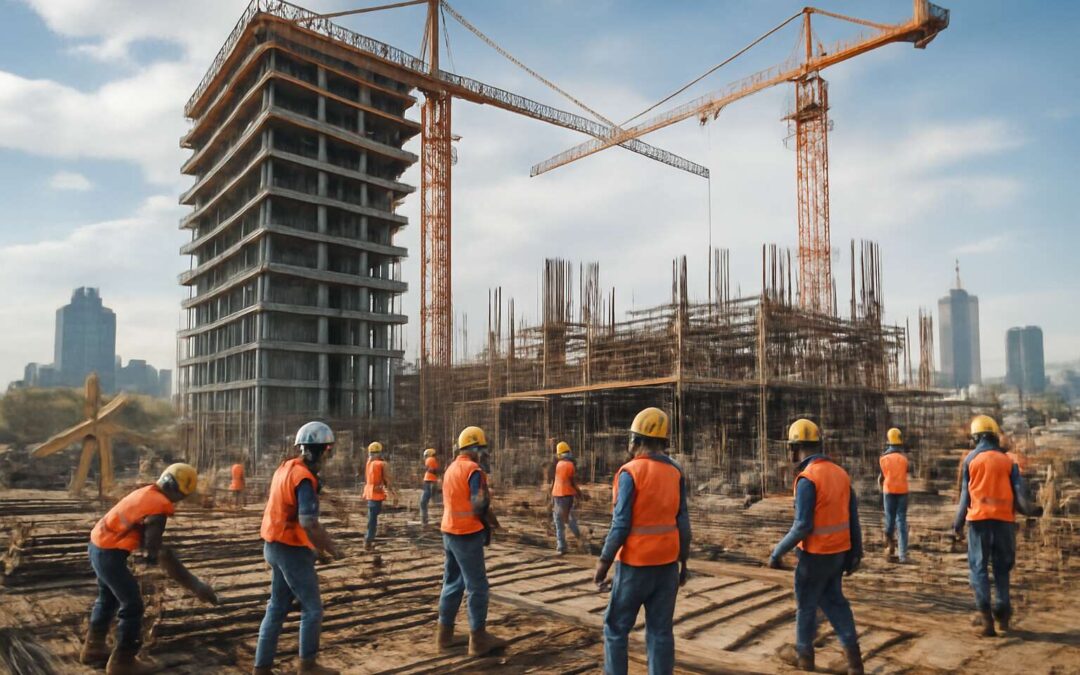
South Africa construction market overview
Economic landscape and demand drivers
Infrastructure is the backbone of growth, and in South Africa, the construction industry in south africa often proves that truth in action! A strong push on public works last year reshaped townscapes and supply chains, reminding readers that every beam bears a wider responsibility.
Economic landscape and demand drivers are tethered to policy, finance, and the tempo of urban renewal. Key forces include:
- Public infrastructure investment and maintenance programs
- Housing delivery and urban regeneration projects
- Energy transition projects, including grid upgrades and renewables
Manufacturing resilience, supplier ecosystems, and workforce skills shape the market’s resilience. With currency cycles and policy shifts, project pipelines endure when local content rules and procurement practices align with long-term demand.
Major segments and market players
Public works and urban renewal are not merely headlines; they are the living rhythm of the construction industry in south africa. Amid currency swings and policy shifts, the sector stitches public ambition to private capital, turning vacant parcels into legible townscapes with lasting local value!
Across the market, major segments shape momentum and capability:
- Building construction and urban housing
- Civil engineering and transport infrastructure
- Energy—grids, renewables and utilities
- Mining and industrial facilities
- Water and wastewater networks
From our vantage point, the project horizon rewards collaboration, safety and quality. Leading players anchor the pipelines and drive local content while navigating procurement cycles.
- WBHO
- Aveng
- Stefanutti Stocks
- Murray & Roberts
Ultimately, these forces define the evolution of the construction industry in south africa as it learns to balance speed with sustainability and social value in every build.
Supply chain, materials and labor
Across the construction industry in south africa, demand keeps pace with cost shifts and longer lead times. Material prices rose roughly 6–8% last year, redefining bids and schedules. In this environment, procurement clarity and supplier alignment are not options—they’re essentials!
Supply chains are rebalancing around local sourcing and smarter logistics. Domestic cement and steel anchor timelines, while import dependence remains a reality. A modular, well-coordinated flow reduces delays and keeps projects on track.
To bridge gaps, the labor market and training pipeline matter as much as material sourcing.
- local content development
- apprenticeship programs
- quality subcontractor oversight
Collaboration remains the antidote—aligning schedules, safety and quality strengthens the supply chain and sustains the industry.
Regulation, policy and industry challenges
Across South Africa’s skylines, regulation acts like wind shaping the tallest cranes. The construction industry in south africa is learning to read the weather of policy shifts—procurement reform, local-content mandates, and tougher safety codes—redefining bids and timelines. These rules aren’t obstacles but navigational stars, guiding decisions from design to financing. Permit queues tighten when coordination falters and loosen when authorities share a common timetable.
- Permitting and municipal capacity bottlenecks
- Ambiguity in safety, environmental and compliance standards
- Clear, enforceable local-content requirements
When regulation, policy and industry participants align, the ecosystem moves as one, turning risk into reliable pacing and visible progress.
