
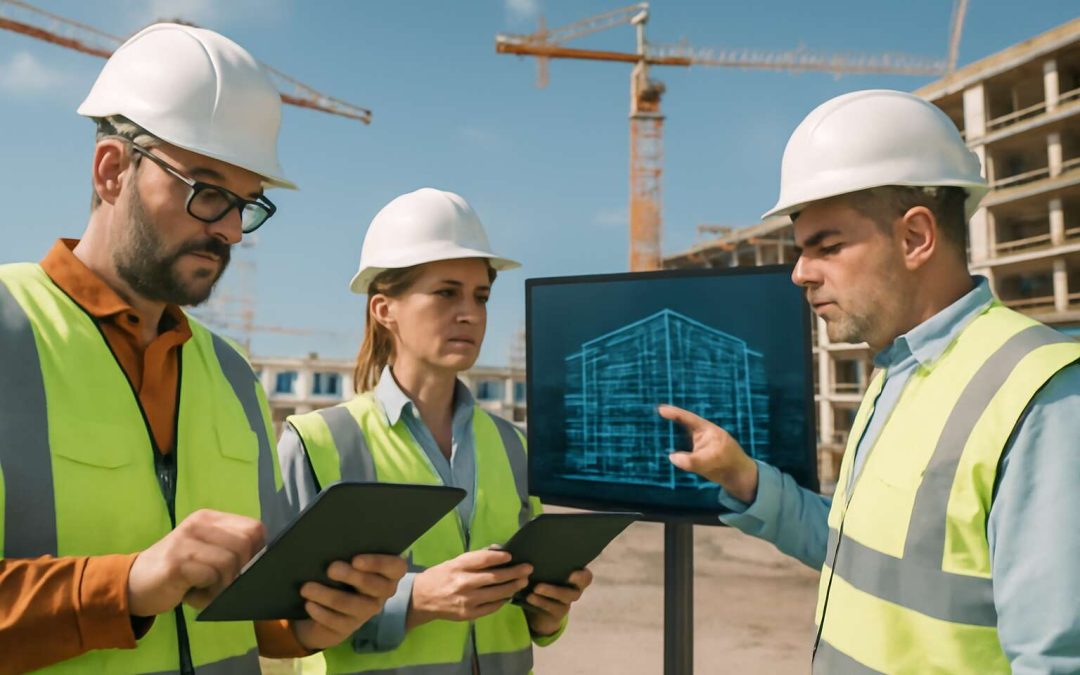
Advancements in Building Information Modeling (BIM)
Overview of BIM
Building Information Modeling, or BIM, has revolutionized construction technology faster than you can say “blueprint.” It’s like giving architects and engineers a crystal ball—allowing them to see potential pitfalls before the first brick is laid. With over 70% of major construction projects worldwide now using BIM, its importance is undeniable. This digital wizardry transforms traditional blueprints into dynamic, 3D models that can be manipulated in real-time, saving both time and money.
But what makes BIM truly a game-changer? For starters, it fosters seamless collaboration among stakeholders, reducing miscommunication and costly errors. In South Africa, where infrastructure projects often face unique challenges, BIM’s ability to integrate project data into a single, easy-to-navigate platform is invaluable. It’s not just about creating a pretty model; it’s about revolutionizing how construction technology enhances project outcomes. Here are some key features that make BIM stand out:
- Clash detection, which prevents costly design conflicts before they escalate.
- Accurate quantity take-offs, ensuring materials are precisely estimated without guesswork.
- Lifecycle management, allowing project teams to oversee everything from design to demolition with ease.
Benefits of BIM Integration
Advancements in building information modeling (BIM) are transforming construction technology into a realm where imagination meets precision. As more projects in South Africa embrace BIM, the benefits become undeniable—delivering not just efficiency but an almost supernatural ability to foresee and mitigate issues before they manifest. The true power of BIM lies in its seamless integration capabilities, turning complex data into actionable insights with astonishing clarity.
One of the most compelling advantages is its ability to enhance project coordination. By unifying design, scheduling, and cost estimation into a single digital ecosystem, BIM reduces the chaos often associated with large-scale construction. This integration directly correlates with a significant reduction in costly errors and delays. For instance, clash detection—an automatic feature within BIM—identifies conflicts between structural elements early on, saving time and resources.
Furthermore, the impact of BIM extends into lifecycle management, allowing project teams to oversee every phase—design, construction, maintenance, and eventual demolition—with unprecedented control. As construction technology evolves, the integration of BIM continues to unlock new horizons of efficiency, accuracy, and collaboration in South Africa’s infrastructure landscape.
Future Trends in BIM Technology
As the dawn of the future approaches, the horizon of building information modeling (BIM) continues to expand with breathtaking possibilities. In South Africa’s vibrant construction landscape, advancements in construction technology are not merely incremental—they are revolutionary, promising a metamorphosis in how we conceive, design, and sustain our built environment.
Emerging trends in BIM technology whisper of an era where artificial intelligence melds seamlessly with digital twins, creating virtual replicas that breathe life into static models. This convergence promises to elevate construction technology, turning complex data into intuitive insights that anticipate problems before they materialize. Imagine a system so intelligent that it predicts structural vulnerabilities or maintenance needs—almost conjuring foresight from the ether!
One of the most anticipated innovations is the integration of augmented reality (AR) and virtual reality (VR) into BIM workflows, transforming project visualization into an immersive experience. Through these portals, stakeholders can navigate through a project long before a single brick is laid, ensuring that every detail aligns with vision and purpose. Such advancements propel construction technology forward, fostering collaboration that is as fluid as a river—dynamic, transparent, and precise.
In this brave new world, the evolution of construction technology is driven by a constellation of features—:
- Enhanced interoperability that bridges disparate software systems, ensuring data flows effortlessly across platforms.
- Real-time data analytics, providing instant feedback and decision-making power to project managers.
- Automation of routine tasks, liberating human ingenuity for the creative and strategic aspects of construction.
With each innovation, BIM becomes more than a tool; it transforms into a living, breathing ecosystem of possibilities—heralding a future where South Africa’s construction projects are not just built but crafted with poetic precision and visionary clarity.
Innovative Construction Project Management Tools
Digital Scheduling and Resource Allocation
In the realm of construction technology, the dawn of digital scheduling and resource allocation has revolutionized project management. Gone are the days of manual updates and frantic phone calls—today’s tools weave a seamless tapestry of real-time data, transforming chaos into clarity. Imagine a control tower, where every resource, from towering cranes to skilled artisans, is harmonized by the precision of digital oversight.
These innovative management tools do more than just organize; they anticipate. Through intelligent algorithms, potential delays are flagged before they manifest, allowing project managers to pivot swiftly and keep the rhythm of construction unbroken. The power of construction technology lies in its ability to synchronize every facet of a project, ensuring that deadlines are met with a symphony of efficiency.
- Real-time updates on resource availability
- Automated scheduling adjustments
- Enhanced collaboration across teams
It’s a dance of data—each step choreographed with purpose—fueling the future of construction with precision and grace. In South Africa’s vibrant construction landscape, these tools are not just innovations; they are the backbone of progress.
Real-Time Collaboration Platforms
In the high-stakes world of South African construction, staying ahead means embracing cutting-edge construction technology that fosters seamless communication and swift decision-making. Innovative construction project management tools now serve as the pulse of every successful build, with real-time collaboration platforms transforming isolated efforts into a synchronized effort. These platforms dissolve geographical and departmental boundaries, creating a unified workspace where updates flow instantaneously, and everyone is on the same page.
Imagine a digital cockpit, where architects, engineers, and contractors can share live data, track progress, and address issues as they arise—before they escalate. To maximize efficiency, many platforms feature automated notifications and instant messaging capabilities, ensuring no critical detail is overlooked. These tools don’t just streamline workflow—they embed a layer of strategic oversight that anticipates potential setbacks and offers solutions in real time. This dynamic approach to construction management is transforming the South African construction landscape, making projects more predictable, transparent, and resilient.
Automation and Workflow Optimization
In the relentless pursuit of construction excellence, automation and workflow optimization have become the heartbeat of modern construction technology. These tools don’t just streamline processes—they revolutionize the entire project lifecycle. Automated systems can now handle routine tasks, freeing up skilled professionals to focus on critical problem-solving and creative solutions. This shift reduces delays, cuts costs, and enhances overall project predictability.
Imagine a scenario where project data flows seamlessly between departments, with algorithms adjusting schedules in real time to accommodate unforeseen delays. This isn’t science fiction; it’s the power of advanced construction technology at work. By leveraging automation, firms can optimize workflows, ensure resource efficiency, and maintain tight control over project milestones.
To illustrate, many South African construction companies are adopting construction project management tools that incorporate:
- Automated task assignment
- Progress tracking dashboards
- Predictive analytics for risk mitigation
This integrated approach embeds a layer of strategic oversight that anticipates setbacks before they materialize. The result? Projects that are not only faster and more efficient but also more resilient to the unpredictable challenges inherent in the construction industry. It’s a new era—where construction technology transforms chaos into order and uncertainty into opportunity.
The Role of Drones in Construction
Site Surveying and Mapping
Construction technology is evolving at a breakneck pace, and drones are leading the charge in revolutionizing site surveying and mapping. In a landscape where precision and efficiency are paramount, drones offer an unmatched vantage point, capturing high-resolution images and detailed topographical data in a fraction of the time traditional methods require. This technological leap not only accelerates project timelines but also enhances accuracy, reducing costly errors before they occur.
With the ability to fly over complex terrains and congested sites, drones provide a bird’s-eye view that was previously impossible without heavy equipment or lengthy manual surveys. They enable construction teams to create detailed 3D models and geographic information system (GIS) maps, which greatly improve planning and resource allocation. The integration of drones in construction technology ensures that projects stay on track, within budget, and aligned with safety standards.
Here’s how drones are shaping the future of construction site surveying and mapping:
- Rapid data collection across expansive sites
- Generation of precise topographical maps and 3D models
- Real-time monitoring of progress and potential hazards
Progress Monitoring
In the realm of construction technology, drones have emerged as silent sentinels, transforming progress monitoring from a tedious chore into a ballet of precision and immediacy. These aerial marvels capture vital data that paints a vivid portrait of a project’s evolution, allowing stakeholders to witness the unfolding story in real time. The beauty lies in their ability to fly over sprawling sites, revealing details that once required days of manual inspection, now delivered within moments.
With this elevated perspective, construction teams can detect potential hazards before they manifest into costly setbacks. The use of drones for progress monitoring ensures that projects remain aligned with schedules and safety standards, fostering a culture of proactive management. From tracking material delivery to assessing structural integrity, these technological marvels redefine what’s possible in modern construction technology.
- Accelerated data collection across expansive sites
- Enhanced accuracy in progress reports
- Early identification of issues, reducing delays
In a landscape as dynamic as South Africa’s construction industry, the integration of drones exemplifies how innovation can elevate standards and forge a resilient pathway toward infrastructural excellence. The sky is not the limit—it’s the new vantage point from which construction success is measured.
Safety Inspections
In the shadowed corridors of modern construction, where unseen dangers lurk behind every steel beam and crumbling facade, drones have become the silent guardians—spectral sentinels that redefine safety inspections. These aerial phantoms glide over treacherous sites, capturing imagery that reveals hidden flaws and potential hazards before they manifest into catastrophe. It is a dance of shadows and light—where technology and vigilance intertwine to safeguard lives.
By leveraging advanced construction technology, drones provide an elevated perspective that human eyes cannot attain. They survey towering scaffolds, unstable structures, and inaccessible areas with a precision that borders on the supernatural. This vigilant watchfulness reduces the need for perilous manual inspections, allowing safety teams to detect issues early and act swiftly. In an industry where every second counts, such proactive measures can mean the difference between life and death.
Furthermore, the integration of drones into safety protocols fosters a culture of continuous vigilance. They can:
- Identify structural vulnerabilities lurking beneath the surface
- Monitor ongoing repairs and ensure adherence to safety standards
- Document progress and hazards for future analysis
In South Africa’s dynamic construction landscape, where the terrain often complicates conventional inspections, drones emerge as indispensable tools—hauntingly efficient and unwavering in their watch. The realm of construction technology thus reveals itself not merely as innovation but as a necessary evolution—an eternal vigil cast from the sky, guarding against the unseen terrors that threaten progress.
Construction Robotics and Automation
Robotic Bricklaying and Masonry
Construction technology is transforming the way buildings are constructed. Robotic bricklaying and masonry are at the forefront of this shift, offering speed and precision that manual labor simply can’t match. These systems can lay bricks faster, with fewer errors, and with consistent quality. It’s no surprise that many construction firms in South Africa are adopting robotic solutions to stay competitive.
Robotics in construction are not limited to just bricklaying. Automated systems can handle complex masonry tasks, reducing the need for extensive labor and improving safety on-site. For example, robotic bricklayers can work tirelessly, regardless of weather conditions, ensuring project timelines are met. This innovation accelerates project completion and enhances overall efficiency.
Incorporating automation into construction technology also means better resource management. Automated systems optimize material usage and minimize waste, making projects more sustainable. As the sector evolves, these advanced robotic systems are set to become standard, revolutionizing the face of construction in South Africa.
Autonomous Construction Vehicles
In the realm of construction technology, the advent of autonomous construction vehicles marks a new era of ingenuity and efficiency. These marvels of engineering move seamlessly across rugged terrains and challenging sites, guided by sophisticated sensors and AI-driven navigation systems. They perform tasks ranging from earthmoving to material transportation, often operating tirelessly without fatigue. This revolutionary shift not only accelerates project timelines but also elevates safety standards by reducing human exposure to hazardous environments.
Imagine fleets of autonomous bulldozers, excavators, and dump trucks working in harmony—each machine communicating and adapting to the evolving landscape. Such integration transforms traditional construction sites into dynamic ecosystems. For South Africa’s burgeoning infrastructure sector, embracing these innovations in construction technology means staying ahead in a competitive landscape. This synergy of robotics and automation is reshaping how projects are delivered, ensuring precision, reducing waste, and fostering sustainability.
3D Printing for Building Components
Construction robotics and automation are revolutionizing building sites across South Africa, pushing the boundaries of what’s possible in construction technology. Imagine robotic systems that can lay bricks with pinpoint accuracy or assemble complex components without human intervention — it’s no longer science fiction. 3D printing for building components has emerged as a game-changer, offering unprecedented levels of customization and speed. This innovative technique allows for the rapid creation of structural elements directly on-site, reducing material waste and cutting project timelines dramatically.
In fact, some companies are now using 3D printing to craft entire sections of buildings, from walls to decorative features, all with minimal labor. The potential of these advancements extends beyond mere efficiency; they introduce new levels of precision, sustainability, and safety. As construction technology continues to evolve, the integration of robotic bricklaying, automated assembly, and 3D printed components will define the future landscape of South Africa’s infrastructure development. The marriage of robotics and automation in construction promises a future where projects are completed faster, safer, and more sustainably than ever before.
Emerging Sustainable Construction Technologies
Green Building Materials
In the shadowed corridors of progress, a new dawn whispers through the cracks of antiquated methods—emerging sustainable construction technologies beckon with promises of renewal. These green building materials, forged from nature’s quiet rebellion, challenge the relentless march of environmental degradation. Imagine walls woven from recycled plastics or bio-based composites, their resilience intertwined with the earth’s own breath. Such innovations are not mere whimsy but vital chapters in the evolving narrative of construction technology, where sustainability becomes the silent architect of tomorrow.
This renaissance in building practices emphasizes the importance of eco-conscious choices. The adoption of materials like hempcrete, bamboo, and reclaimed timber weaves a tapestry of durability and ecological harmony. These sustainable construction technologies are increasingly vital in South Africa, where climate resilience and resource conservation are more than ideals—they are imperatives. As the landscape shifts, so too does the blueprint of progress, fueled by a desire to craft structures that stand as monuments not to excess, but to mindful innovation.
Energy-efficient Construction Techniques
Energy-efficient construction techniques are transforming the blueprint of modern buildings across South Africa, blending ingenuity with a resolute commitment to sustainability. As the nation grapples with the pressing demands of climate resilience, innovative approaches such as passive solar design, high-performance insulation, and smart ventilation systems are gaining momentum. These methods don’t just trim utility bills—they reduce the carbon footprint of entire communities.
Imagine walls that breathe, windows that adapt to the sun’s whims, and roofs that harvest rainwater—all made possible through cutting-edge construction technology. To streamline implementation, some projects are adopting a
- holistic approach combining renewable energy sources
- integrated building management systems
that optimize energy consumption seamlessly. Such advancements exemplify how sustainable construction technologies are setting the stage for a future where every structure is a testament to both innovation and environmental stewardship.
Smart Building Automation Systems
In the shadowed realm of modern construction technology, a new dawn emerges—one where buildings breathe with an almost living consciousness. Emerging sustainable construction technologies are no longer mere visions but tangible forces reshaping South Africa’s skylines. Among these, smart building automation systems stand as silent sentinels, orchestrating environments with eerie precision. They monitor humidity, temperature, and occupancy, seamlessly adjusting settings to maximize efficiency while minimizing environmental impact.
These systems employ a labyrinth of sensors and data streams—an intricate web that transforms static structures into dynamic entities. Incorporating features such as adaptive lighting, real-time energy management, and predictive maintenance, they herald a future where sustainability and technological sophistication converge. It’s as if the very essence of these buildings is infused with a spectral intelligence, whispering secrets of optimal energy use and eco-friendly operation.
- Integrated renewable energy sources
- Advanced control algorithms
- Seamless user interfaces
Such innovations underscore the relentless march of construction technology, carving pathways toward a resilient and sustainable future—an eternal dance between human ingenuity and the ghostly allure of progress. South Africa’s architects and engineers are forging ahead, embracing these spectral marvels that promise to redefine what it means to build for tomorrow’s world.
Augmented Reality (AR) and Virtual Reality (VR) in Construction
Design Visualization and Client Engagement
Augmented Reality (AR) and Virtual Reality (VR) are revolutionizing construction technology, transforming the way professionals visualize and engage with building projects. Imagine walking through a digital twin of a skyscraper before the first brick is laid—AR and VR make this possible, bridging the gap between imagination and reality. These immersive tools offer clients an unprecedented level of interaction, allowing them to explore designs firsthand and provide instant feedback that can fine-tune every detail. It’s a game-changer in client engagement, fostering transparency and trust from the very beginning of the project.
For construction teams, AR and VR enhance design accuracy and streamline collaboration. They enable project stakeholders to identify potential issues early, reducing costly errors down the line. As construction technology continues to evolve, the integration of AR and VR is becoming essential, offering a glimpse into future possibilities where virtual walkthroughs and real-time modifications will redefine industry standards. This digital leap not only accelerates project timelines but also elevates the overall quality of construction projects, making the impossible, possible with every virtual step.
Training and Safety Simulations
Augmented Reality (AR) and Virtual Reality (VR) are transforming construction technology by offering immersive training experiences and safety simulations. These tools allow workers to navigate complex construction sites virtually, providing a safe environment to learn and practice essential skills without the risk of injury. They also enable teams to simulate real-world hazards, helping to identify potential safety issues before they become real problems.
In fact, many construction companies are now implementing AR and VR for safety training to ensure compliance and reduce accidents on site. For example, a VR safety module can simulate working at heights or operating heavy machinery, giving workers a chance to gain confidence and familiarity with procedures. This approach not only enhances safety but also boosts overall productivity by reducing downtime caused by accidents or misunderstandings.
- Realistic hazard identification
- Enhanced skill retention
- Cost-effective training sessions
- Faster onboarding of new staff
As construction technology continues to evolve, the integration of AR and VR into training programs will become even more sophisticated. These innovations promise a future where safety is embedded into every aspect of construction, making sites safer and more efficient for everyone involved.
On-site Equipment Use and Maintenance
Within the realm of construction technology, Augmented Reality (AR) and Virtual Reality (VR) are revolutionizing the way on-site equipment is used and maintained. These immersive tools turn the mechanical into the magical, allowing workers to visualize complex machinery and systems before even setting foot on the site. Imagine standing amidst a virtual crane, inspecting its components, or troubleshooting an engine—without risking a single scratch or misstep. This not only streamlines maintenance but also elevates safety standards to new heights.
By integrating AR and VR, teams can perform realistic hazard identification and conduct detailed walkthroughs of equipment operation. For example, an AR overlay can highlight wear points or potential failure zones on heavy machinery, alerting operators to maintenance needs before issues escalate. This proactive approach ensures smoother workflows and reduces costly downtime. The future of construction technology promises even more sophisticated simulations, transforming maintenance from routine chore to an art form—where precision and safety dance in perfect harmony.
Innovations in Construction Safety Technologies
Wearable Safety Devices
Construction sites are among the most hazardous workplaces, but recent innovations in construction technology are transforming safety protocols. Wearable safety devices are now a staple, offering real-time data that keeps workers protected. These smart devices monitor vital signs, detect falls, and alert supervisors instantly, reducing response times and preventing injuries.
Smart helmets, safety vests embedded with sensors, and GPS tracking are just a few examples of how construction technology enhances onsite safety. These innovations not only improve compliance but also foster a safety-first culture.
In South Africa, where construction accidents remain a concern, integrating wearable safety devices has proved to be a game-changer. They provide a proactive approach to safety management, ensuring workers stay aware of hazards and improve overall site safety standards. As construction technology evolves, so too does the potential to safeguard every worker on the ground!
Remote Monitoring and Alerts
In the realm of construction technology, remote monitoring and alert systems have emerged as the vigilant guardians of safety, transforming traditional oversight into a seamless digital sentinel. Imagine a network of sensors and cameras woven into the very fabric of a construction site, tirelessly watching over every corner, every movement, every breath of activity. These innovations allow supervisors to oversee multiple sites from distant command centers, utilizing real-time data streams that paint a vivid picture of ongoing operations.
When hazards loom—be it unstable structures, equipment malfunctions, or environmental threats—instant alerts are dispatched via mobile devices or control panels. This immediate response capability significantly curtails delays, ensuring swift action before incidents escalate. The integration of construction technology with remote monitoring systems fosters a proactive safety culture, especially critical in South Africa’s often unpredictable construction landscape.
- Advanced sensors detect unusual vibrations or structural shifts, triggering alarms.
- Environmental monitors track dust, noise, and toxic gases, alerting workers to potential health risks.
- Automated cameras use AI-powered analysis to identify unsafe behaviors or conditions in real time.
Such innovations exemplify how construction technology elevates safety protocols beyond reactive measures. They empower teams to anticipate and address hazards before they materialize, turning the construction site into a fortress of foresight and resilience. In this evolving landscape, remote monitoring and alerts are not merely tools—they are the vanguard of a safer, smarter future for South Africa’s builders.
Enhanced Site Security Technologies
Innovations in construction safety technologies are reshaping how projects are protected and managed across South Africa’s bustling construction sites. Cutting-edge site security technologies now incorporate intelligent surveillance systems that use AI to analyze footage in real time, alerting supervisors to any suspicious activity or unauthorized access. This not only enhances safety but also fortifies site security, a critical concern in many regions.
Furthermore, advanced sensors have become invaluable tools for detecting structural weaknesses or environmental hazards before they escalate into accidents. For instance, vibration sensors can identify subtle shifts in a building’s framework, prompting immediate inspections. Environmental monitors continuously track dust, toxic gases, and noise levels, ensuring compliance with health standards and safeguarding workers’ well-being.
- Integration of facial recognition technology for secure access control
- Deployment of autonomous drones for perimeter surveillance
- Use of smart fencing equipped with motion sensors and alarms
These innovations exemplify how construction technology elevates site security from mere protection to proactive risk mitigation. As the industry continues to evolve, adopting such advancements becomes essential in creating safer, more resilient construction environments—especially in a landscape as diverse and dynamic as South Africa’s.
The Impact of IoT on Construction Operations
Asset Tracking and Management
In the relentless pursuit of efficiency, the impact of IoT on construction operations has become a silent revolution—an unseen force transforming how we manage assets on site. The integration of IoT devices into construction technology enables real-time asset tracking, providing unparalleled visibility into the location, condition, and usage of critical equipment. This shift isn’t just about convenience; it’s about redefining accountability and reducing waste in a landscape often marred by oversight and inefficiency.
By leveraging IoT-enabled sensors and connected devices, project managers gain immediate insights into equipment performance and maintenance needs. This proactive approach minimizes downtime and extends asset lifespan, ultimately saving costs. For instance, RFID tags and GPS trackers embedded in machinery streamline inventory management, ensuring that resources are optimally allocated and never misplaced amid the chaos of a bustling site. In a sector where precision can mean the difference between success and failure, these advancements in construction technology play a pivotal role in elevating operational standards.
Predictive Maintenance
Predictive maintenance driven by IoT is revolutionizing construction technology across South Africa. Instead of waiting for equipment to break down, project managers now harness real-time data to anticipate failures before they happen. This proactive approach not only reduces unexpected downtime but also extends the lifespan of vital machinery—crucial in a sector where delays can be costly.
With IoT-enabled sensors continuously monitoring equipment performance, maintenance can be scheduled precisely when needed. This targeted strategy minimizes unnecessary repairs and optimizes resource allocation. Here’s how it works:
- Continuous data collection from connected devices
- Analysis of performance metrics to identify anomalies
- Automated alerts for maintenance needs
This seamless integration of IoT within construction technology allows project teams to operate more efficiently, reducing waste and boosting accountability. As construction projects grow more complex, predictive maintenance proves to be an indispensable component of modern construction technology, ensuring projects stay on track and within budget.
Data-Driven Decision Making
In the labyrinthine world of construction, where every decision can ripple into months of delay or millions in unforeseen costs, the infusion of IoT into construction technology has become an unequivocal game-changer. The seamless flow of real-time data transforms raw information into a formidable arsenal for data-driven decision making, elevating project management from reactive to anticipatory. South Africa’s evolving infrastructure landscape is witnessing this paradigm shift firsthand, as intelligent sensors and connected devices provide an intricate web of insights that were once unimaginable.
With this technological renaissance, construction teams gain the ability to scrutinize performance metrics continuously, enabling them to identify inefficiencies and anomalies before they manifest into costly setbacks. This proactive approach fosters not just operational agility but also enhances accountability, ensuring resources are allocated with surgical precision. An integrated system might feature:
- Real-time performance analytics
- Automated alerts for potential issues
- Data-rich dashboards for comprehensive oversight
Such capabilities underscore how IoT-driven construction technology reshapes decision-making processes—turning mountains of data into actionable intelligence. As projects grow increasingly complex, the reliance on sophisticated data analysis becomes not just advantageous but essential. The future of construction in South Africa hinges on this intelligent confluence of technology and insight, where every byte of data becomes a cornerstone for success.
