
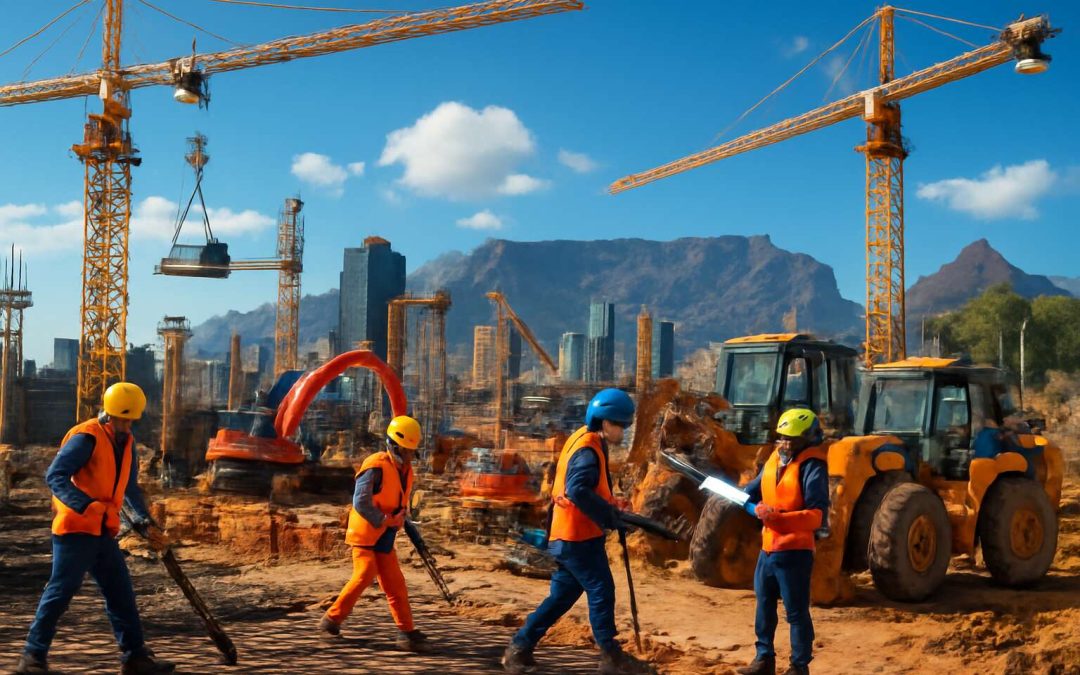
Overview of the South African Construction Industry
Market Size and Growth Trends
The South African construction industry is experiencing a remarkable resurgence, driven by ambitious infrastructure projects and urban expansion. With a market size valued at several billion rand, this sector has demonstrated consistent growth, even amidst global economic fluctuations. The government’s focus on infrastructure development, coupled with private investment, creates a fertile ground for construction opportunities in South Africa.
Recent trends reveal a strategic shift towards sustainable building practices and smart city initiatives, making the landscape more dynamic than ever. The industry’s resilience is underscored by a diverse range of projects—from transport networks to commercial real estate—each offering a window of opportunity for savvy investors and contractors alike.
- Massive upgrades to transport infrastructure
- Expanding commercial and residential developments
- Investment in renewable energy projects
Key Drivers for Development
Amidst the vibrant heartbeat of South Africa’s burgeoning economy, the construction industry stands as a testament to resilience and visionary growth. The key drivers for development are as diverse as the landscapes they transform — from gleaming urban skylines to expansive infrastructure corridors. The nation’s commitment to modernise its infrastructure fuels a relentless tide of construction opportunities in South Africa, where each project echoes a promise of progress.
Crucial to this momentum is the government’s strategic investment in upgrading transport networks, a vital artery for economic vitality. Simultaneously, private sector enthusiasm for commercial and residential developments injects vitality into cityscapes eager for renewal. Renewable energy projects, harnessing South Africa’s abundant sunlight and wind, are also catalysing a new wave of construction opportunities, aligning economic growth with environmental stewardship.
- Robust infrastructure upgrades
- Urban expansion and smart city initiatives
- Renewable energy investments
These forces intertwine, creating a fertile ground for investors and contractors seeking to carve their mark in a landscape rich with potential. The confluence of innovation and tradition in South Africa’s construction sector promises a future as luminous as the projects it champions.
Government Initiatives and Policies
South Africa’s government is clearly playing a strategic game, prioritising infrastructure and sustainable growth with a flair that would make even the most seasoned investor sit up and take notice. With ambitious policies fostering urban renewal, the nation is positioning itself as a beacon of modernisation in Africa. The National Development Plan, for instance, underscores the importance of infrastructure investment, aiming to catalyse economic development and social inclusion. Such initiatives create a fertile environment for construction opportunities in South Africa, where public projects often serve as the backbone of nationwide progress.
Furthermore, government policies are increasingly favouring public-private partnerships (PPPs), allowing private sector expertise and capital to blend seamlessly with public ambition. This collaborative approach not only accelerates project delivery but also ensures that development aligns with national priorities. From transport upgrades to housing projects, these policies are designed to unlock a wave of construction opportunities in South Africa, transforming the landscape into a canvas of innovation and resilience.
Major Construction Sectors in South Africa
Residential and Commercial Buildings
South Africa’s construction sector is a true reflection of the nation’s resilience and potential. With an estimated 1.2 million people employed in the industry, the scope for growth within major construction sectors remains significant. Residential and commercial buildings constitute the backbone of this vibrant landscape, driven by urbanisation and infrastructure upgrades.
Residential construction continues to flourish, particularly in major urban centres like Johannesburg, Cape Town, and Durban. The demand for affordable housing, coupled with government-backed initiatives, has led to a surge in new housing developments. Simultaneously, commercial buildings are evolving to meet the needs of expanding businesses and multinational corporations looking to establish a presence in South Africa. From office complexes to retail parks, these projects are shaping the future skyline of South Africa.
- Urban renewal projects
- Mixed-use developments
- Industrial parks
All these facets highlight the diverse opportunities available within the construction industry, making South Africa a compelling destination for investors and builders alike. The growth in residential and commercial buildings underscores the country’s ongoing development, presenting numerous construction opportunities in South Africa that are too promising to ignore.
Infrastructure Projects – Array
South Africa’s infrastructure projects are the heartbeat of its economic vitality, embodying both resilience and a relentless pursuit of progress. With billions invested annually, the nation’s major construction sectors are expanding at an unprecedented pace. Infrastructure development is no longer just about roads and bridges; it’s about laying the groundwork for a future defined by innovation and connectivity.
The government’s focus on large-scale infrastructure projects creates a fertile landscape for construction opportunities in South Africa. These initiatives include the expansion of transport networks, energy grids, and water management systems—each vital for sustainable growth. Urban renewal projects and the creation of industrial parks are integral to this vision, offering substantial scope for builders and investors alike.
Within this context, the following sectors stand out:
- Transport infrastructure, including railways and airports
- Renewable energy facilities, such as solar and wind farms
- Water and sanitation systems to support burgeoning urban centres
This interconnected web of development underscores a profound truth: South Africa’s future hinges on its ability to evolve its infrastructure. As construction opportunities in South Africa continue to grow, those with foresight and dedication will find themselves at the forefront of shaping a nation’s destiny.
Mining and Industrial Facilities
South Africa’s mining and industrial sectors are the silent giants of the nation’s economic landscape, quietly pulsing with potential and promise. As the continent’s mineral wealth continues to attract global attention, the demand for state-of-the-art industrial facilities and specialised infrastructure grows more urgent than ever. The construction opportunities in South Africa within this realm are as diverse as they are lucrative, spanning everything from large-scale processing plants to sophisticated logistics hubs.
Particularly noteworthy are the developments in mineral beneficiation plants, where innovation meets resource extraction. These facilities are pivotal in adding value locally, reducing reliance on exports, and elevating South Africa’s industrial profile. Additionally, the expansion of energy-intensive mining operations fuels the need for robust energy infrastructure—solar, wind, and traditional power sources—that must be carefully integrated into these industrial ecosystems.
For those with a flair for the extraordinary, the construction of specialised facilities such as metallurgical plants or chemical processing units offers a tantalising glimpse into future growth avenues. This sector’s symbiotic relationship with the mining industry ensures a continuous stream of opportunities—each project a testament to South Africa’s unwavering industrial resilience.
Renewable Energy and Green Construction
South Africa’s renewable energy sector is undergoing a profound transformation, driven by an urgent need to diversify power sources and reduce reliance on fossil fuels. The push for green construction is not merely an environmental imperative but a strategic move that unlocks vast construction opportunities in South Africa. Solar farms, wind turbines, and bioenergy facilities are emerging as the backbone of this new energy landscape, demanding specialised construction expertise and innovative design approaches.
The government’s commitment to sustainable development has catalysed a surge in renewable projects, creating a fertile ground for construction companies seeking to tap into these lucrative opportunities. The integration of renewable infrastructure with existing grids presents complex challenges—an invitation for those willing to push the boundaries of conventional construction. As South Africa accelerates its transition to a greener future, the scope for development in this sector continues to expand, promising resilience and growth amid evolving global environmental priorities.
Emerging Construction Opportunities
Urban Development and Smart Cities
South Africa is on the brink of a construction renaissance, driven by the rapid push towards urban development and smart city initiatives. These projects go beyond traditional infrastructure, integrating technology and innovative design to create sustainable, efficient urban spaces. The focus on smart cities presents a wealth of construction opportunities in South Africa, particularly in integrating IoT, renewable energy solutions, and modern transportation networks.
As cities expand, the demand for smart infrastructure skyrockets. This includes intelligent traffic management, energy-efficient buildings, and data-driven public services. Such developments require specialised expertise, opening doors for contractors and developers eager to capitalise on emerging construction opportunities in South Africa. The government’s commitment to fostering sustainable urban growth ensures these projects are not only timely but also pivotal for future economic resilience.
Affordable Housing Projects
Amidst South Africa’s vibrant urban expansion, one of the most urgent and heartfelt construction opportunities lies in affordable housing projects. With millions of South Africans still living in overcrowded or inadequate dwellings, the demand for cost-effective, durable homes has never been more pressing. These projects offer a chance to transform lives, providing stability and dignity to families who have long endured the hardships of substandard housing.
Government initiatives and private sector investments are converging to address this critical need, opening a floodgate of construction opportunities in South Africa. Innovative building techniques, such as modular housing and sustainable materials, are becoming vital to meeting the scale of demand efficiently. Contractors and developers who harness these techniques can help create inclusive, resilient communities that stand the test of time.
To better understand the scope of these opportunities, consider the following key areas:
- Strategic site selection and land acquisition
- Collaboration with local communities to ensure cultural relevance
- Integration of renewable energy solutions for energy-efficient homes
As South Africa continues its journey towards equitable urban growth, the focus on affordable housing remains a beacon of hope, promising a future where everyone has a place to call home. These construction opportunities in South Africa are more than projects—they are catalysts for social transformation and economic resilience.
Tourism and Hospitality Infrastructure
South Africa’s tourism and hospitality sector is booming, and with it comes a treasure trove of construction opportunities in South Africa. The country’s breathtaking landscapes and vibrant cities attract millions of visitors annually, creating a pressing need for world-class infrastructure. Think luxury hotels, boutique lodges, and sprawling resorts—each presenting a unique chance for savvy contractors to leave their mark.
Major projects often focus on upgrading existing facilities or building new attractions from the ground up. For example, hospitality developments along the Garden Route or near wildlife reserves are prime real estate for construction companies eager to tap into this growth. The demand isn’t just limited to accommodation; tourism infrastructure such as airports, conference centres, and transportation hubs are also in the pipeline, making the sector a fertile ground for diverse construction opportunities in South Africa.
Here’s a quick glance at some key areas where the construction opportunities in South Africa are particularly ripe:
- High-end hotels and eco-lodges in scenic regions
- Upgrade of airports and transport facilities to accommodate international visitors
- Development of entertainment and conference centres to boost local economies
All these projects not only promise lucrative returns but also play a role in shaping South Africa’s global image as a top-tier tourist destination. The sector’s dynamism makes it an exciting playground for construction firms ready to embrace new challenges and build the future of South Africa’s hospitality landscape. After all, in the world of construction opportunities in South Africa, tourism infrastructure isn’t just about bricks and mortar—it’s about crafting experiences that last a lifetime.
Public-Private Partnership Projects
South Africa’s landscape is shifting—the horizon teeming with promise as public-private partnership projects breathe new life into its urban and rural corridors. These collaborations are not just infrastructure blueprints; they are symphonies of innovation, blending government vision with private enterprise’s agility. The allure lies in their potential to transform neglected spaces into thriving centres of commerce and community.
One of the most captivating facets of these emerging construction opportunities in South Africa is the chance for visionary contractors to participate in projects that fuse sustainability with modernity. For instance, large-scale transport hubs and eco-friendly developments are often tailored through PPP models, offering a fertile ground for specialised expertise. These initiatives often involve a diverse array of stakeholders, weaving together the fabric of South Africa’s future urban landscapes.
Here are some areas where these partnership-driven projects are making waves:
- Renewable energy facilities that power communities sustainably
- Urban regeneration schemes revitalising historic districts
- State-of-the-art logistics and distribution centres to bolster trade
Such ventures do more than fill construction opportunities in South Africa; they craft enduring legacies, elevating the nation’s infrastructure while fostering economic resilience. They are a testament to the country’s unwavering spirit of collaboration and progress, beckoning builders with a touch of magic and a promise of a brighter tomorrow.
Key Regions Offering Construction Opportunities
Gauteng
Gauteng continues to stand out as the pulsating heart of South Africa’s construction opportunities. With its bustling urban centres and burgeoning commercial landscape, this province is a magnet for investors eager to capitalise on the country’s economic revival. The region’s strategic location and vibrant infrastructure make it a prime candidate for large-scale projects, from office towers to transportation hubs.
Moreover, Gauteng’s commitment to transforming urban spaces into smart cities propels numerous development initiatives. The construction opportunities in South Africa here are not merely about building structures but about shaping the future of urban living. Key regions within Gauteng such as Johannesburg and Pretoria are witnessing a surge in innovative projects, including green building initiatives and modernised transport networks.
For those considering investment, an understanding of the diverse sectors—residential, commercial, and industrial—is essential.
- Residential complexes
- Office parks
<li Logistics hubs
These sectors exemplify the multifaceted nature of construction opportunities in South Africa’s economic powerhouse, positioning Gauteng as a hub of endless potential.
Western Cape
In the vibrant tapestry of South Africa’s development landscape, the Western Cape emerges as a beacon of construction opportunities in South Africa, radiating promise and innovation. This region, famed for its stunning coastal vistas and fertile economic ground, pulses with projects that redefine urban and rural integration. Cape Town, the crown jewel of the Western Cape, is a hub of visionary infrastructure initiatives, from sustainable residential complexes to state-of-the-art commercial centres.
Beyond the bustling cityscape, the Western Cape’s focus on eco-friendly development and green construction has opened a treasure trove of possibilities. The region’s strategic emphasis on tourism infrastructure—luxurious hotels, conference centres, and eco-resorts—creates a fertile ground for investors seeking to capitalise on the country’s ever-growing tourism sector. As the government champions innovative urban renewal projects, the Western Cape continues to be a fertile ground for construction opportunities in South Africa, attracting both local and international stakeholders eager to shape its future.
KwaZulu-Natal
KwaZulu-Natal stands out as a booming hub for construction opportunities in South Africa. Its strategic location along the Indian Ocean coast makes it a magnet for large-scale infrastructure and tourism development. The region’s vibrant port city, Durban, is experiencing rapid growth with new commercial centres, logistics hubs, and revitalised urban spaces. These projects not only boost the economy but also attract significant investment from both local and international developers.
Beyond Durban, KwaZulu-Natal’s inland areas are also ripe with construction prospects. The province’s focus on expanding industrial zones and upgrading transportation networks paves the way for sustained growth. Notably, key projects include:
- Transport corridors connecting inland regions to ports
- Eco-friendly residential complexes in emerging suburbs
- Resort and tourism infrastructure in the Drakensberg and coastal areas
All these developments highlight KwaZulu-Natal’s role as a cornerstone for construction opportunities in South Africa, driven by a blend of economic diversification and strategic planning.
Eastern Cape
Eastern Cape is quietly emerging as a formidable contender in the landscape of construction opportunities in South Africa. Its strategic position as a gateway to the Eastern Cape ports and the increasing demand for infrastructure development make it a region to watch. The province’s rugged beauty conceals a rapidly evolving urban environment, driven by both government initiatives and private sector investments. This creates a fertile ground for innovative construction projects that blend sustainability with modernity.
Key areas within Eastern Cape are witnessing a surge in construction activity, including:
- Renewable energy facilities harnessing wind and solar power
- Transport hubs connecting rural communities to economic centres
- Eco-tourism developments in the Wild Coast and Addo Elephant National Park
With these developments, Eastern Cape stands as a beacon of untapped potential, offering diverse opportunities for builders and investors eager to shape South Africa’s future skyline. The region’s commitment to fostering sustainable growth ensures that construction opportunities in South Africa here are not just fleeting but foundational for years to come.
Limpopo and Mpumalanga
In the heartlands of South Africa’s northern provinces, Limpopo and Mpumalanga are quietly transforming into hubs of robust construction opportunities in South Africa. These regions are no longer peripheral; they are becoming central to the country’s developmental narrative, driven by their rich natural resources and strategic positioning. Limpopo’s expansive landscapes and mineral wealth are attracting infrastructure projects that aim to support sustainable growth and local empowerment. Meanwhile, Mpumalanga, with its proximity to key industrial corridors, is experiencing a boom in energy and transport infrastructure.
Particularly noteworthy is the burgeoning focus on renewable energy projects, such as solar farms and wind power developments, which are carving a niche within these provinces. This shift not only boosts the regional economy but also underscores South Africa’s commitment to green construction and sustainable development. As these regions continue to evolve, they offer fertile ground for investors and builders eager to participate in the future of South Africa’s skyline.
Investment and Business Opportunities for Contractors
Local and International Contractor Engagement
South Africa’s construction sector is experiencing a renaissance, with an influx of investment and burgeoning business opportunities that beckon both local and international contractors. The country’s vision for sustainable growth and infrastructure modernisation has created a fertile ground for those seeking lucrative ventures in construction opportunities in South Africa. From sprawling urban developments to eco-conscious green projects, the landscape is rich with potential for innovative construction firms eager to make their mark.
For contractors, engaging with South Africa’s thriving market offers a unique chance to forge strategic alliances and participate in transformative projects. The government’s push for public-private partnerships (PPPs) has unlocked avenues for investment, particularly in infrastructure, renewable energy, and affordable housing. These initiatives not only stimulate economic growth but also foster lasting partnerships that transcend borders.
- Identify key sectors aligned with your expertise and capacity.
- Leverage local networks and understand the regulatory landscape.
- Embrace sustainable and green construction practices to meet evolving standards.
With a vibrant mosaic of opportunities, the country’s construction opportunities in South Africa are poised to captivate ambitious contractors seeking to leave a lasting legacy in Africa’s most dynamic emerging market.
Joint Ventures and Consortium Formation
In the shadowed corridors of South Africa’s burgeoning construction landscape, investment and business opportunities beckon those daring enough to step into the unknown. The allure of joint ventures and consortium formation offers a unique gateway for contractors eager to navigate the complex tapestry of this emerging market. These alliances not only mitigate risk but also amplify capacity, allowing ventures into projects that demand both vision and resilience.
Strategic partnerships are vital, especially when tackling large-scale infrastructure or green construction projects. Forming a consortium can unlock access to funding, specialised expertise, and local knowledge, transforming ambitious dreams into tangible realities. For those seeking to carve a niche in the realm of construction opportunities in South Africa, understanding the power of collaboration is paramount.
- Identify complementary partners whose expertise aligns with your project scope.
- Leverage local networks to deepen understanding of regulatory landscapes and cultural nuances.
- Engage in joint ventures that foster innovation, sustainability, and shared growth.
In this dance of shadows and light, the potential for profit and legacy in South Africa’s construction opportunities is immense. The right alliance can turn a fleeting opportunity into a monument that endures through the ages, whispering tales of ambition realised in the heart of Africa’s most dynamic terrain.
Tendering and Bidding Processes
Within the shadowed corridors of South Africa’s construction landscape, the tendering and bidding processes hold the key to unlocking lucrative opportunities. For the daring contractor, navigating these pathways requires more than mere ambition — it demands insight into the intricate dance of procurement and regulation. Each project, be it a towering skyscraper or a sprawling infrastructure initiative, beckons with the promise of profit and legacy.
Seizing construction opportunities in South Africa often begins with a strategic approach to tenders and bids. Understanding the specific requirements, aligning expertise with project scope, and showcasing innovative solutions can elevate a contractor above the murky competition. For those willing to delve into this realm, a meticulous review of government notices, industry portals, and local networks can reveal a treasure trove of potential.
In this shadowy theatre, success hinges on having a clear plan. Consider this:
- Assess the project’s technical and financial criteria.
- Build compelling proposals grounded in local knowledge and sustainability.
- Forge alliances that enhance credibility and capacity.
As the bidding process unfolds, the whispers of opportunity grow louder — a siren call for those prepared to stake their claim amidst the darkness. The construction opportunities in South Africa are vast, but only the most astute will transform fleeting moments into enduring monuments of achievement.
Regulatory and Compliance Requirements
Investment and business opportunities for contractors in South Africa’s construction sector are burgeoning, offering a tantalising glimpse into a landscape ripe with potential. As the nation strives to modernise its infrastructure and urban spaces, the regulatory environment becomes a vital compass for navigating these waters. Ensuring compliance with local standards isn’t merely a bureaucratic hurdle; it’s the key to unlocking sustainable growth and forging reputable partnerships.
The regulatory and compliance requirements in South Africa demand meticulous attention to detail. Contractors must adhere to a complex web of legislation, including labour laws, environmental standards, and safety protocols. Failure to do so can result in project delays or legal sanctions, tarnishing reputations and draining resources. Conversely, demonstrating unwavering compliance positions a contractor as a trustworthy player in this competitive arena.
To succeed amid these demands, it’s often advantageous to cultivate local alliances. Engaging with local authorities and industry bodies not only streamlines the approval process but also enriches project design with cultural insight and sustainability. Here’s an overview of essential steps for navigating this landscape:
- Obtain necessary permits and licences aligned with South Africa’s construction codes.
- Ensure comprehensive safety and environmental assessments are in place.
- Maintain transparent documentation to demonstrate ongoing compliance.
Embracing these principles transforms potential pitfalls into stepping stones, allowing contractors to capitalise on South Africa’s vast construction opportunities. The journey through regulation may be intricate, but the reward — a foothold in a thriving market — is undeniably worth the effort.
Funding and Support for Construction Projects
Development Finance Institutions
In the shadowed corridors of progress, funding becomes the unseen hand guiding construction opportunities in South Africa. With an intricate web of development finance institutions standing as silent sentinels, the landscape of infrastructure and urban renewal is constantly reshaped by their subtle influence. These institutions, both local and international, breathe life into ambitious projects that might otherwise remain dormant in the darkness of uncertainty.
Supporting this burgeoning sector are entities such as the Development Bank of Southern Africa and the Industrial Development Corporation, whose roles are pivotal in unlocking capital for visionary construction projects. Their support often manifests through grants, loans, and guarantees, transforming skeletal blueprints into thriving realities. For those seeking to carve their mark in South Africa’s construction scene, understanding the labyrinthine process of tendering and bidding is crucial — a dance of precision and patience.
Amidst the murmur of negotiations, joint ventures and consortium formations emerge as vital conduits for shared risk and pooled expertise. These alliances, forged in the crucible of necessity, open gateways to accessing funding and navigating regulatory maelstroms. As the nation stands on the cusp of a new era of urban and infrastructural renaissance, the importance of strategic financial backing and institutional support cannot be overstated — they are the dark, vital heartbeat behind every construction opportunity in South Africa.
Government Grants and Incentives
Funding remains the unseen engine propelling construction opportunities in South Africa into tangible reality. While the landscape is dotted with ambitious blueprints and visionary plans, it’s often the support from government grants and incentives that transforms these dreams into concrete structures. Public sector initiatives, designed to stimulate growth and address developmental gaps, frequently offer financial assistance that alleviates the burden of initial capital outlay.
In South Africa, strategic incentives such as tax rebates, special economic zones, and preferential procurement policies serve as catalysts for both local and international investors. These measures not only encourage investment but also foster a favourable environment for innovative construction projects. For those navigating the labyrinth of tendering and bidding, understanding the nuances of available support can be the difference between a missed opportunity and a lucrative venture.
- Tax incentives designed to boost green building initiatives
- Government-backed guarantees that mitigate project risk
- Special economic zones offering reduced regulatory hurdles
Such initiatives create a fertile ground for new developments, ensuring that construction opportunities in South Africa continue to flourish amidst economic challenges. It’s a landscape where strategic financial backing and institutional support are not just auxiliary but essential, quietly underpinning the nation’s ongoing urban renaissance.
Private Sector Investment
South Africa’s construction sector is experiencing a renaissance driven by an influx of private sector investment that complements government initiatives. With a burgeoning demand for both residential and commercial infrastructure, private investors are recognising the immense potential for growth within the country’s diverse markets. This synergy between public and private funding creates a fertile environment for innovative projects that can redefine urban landscapes.
Funding for construction projects often comes in various forms, from direct capital injections to strategic partnerships. Many forward-thinking companies are leveraging development finance institutions’ support, which provides essential liquidity and risk mitigation. Additionally, private sector investment is frequently bolstered by favourable policy frameworks, making South Africa an attractive destination for those seeking to capitalise on construction opportunities in South Africa.
- Joint ventures between local and international firms amplify resource pools and expertise.
- Public-private partnership projects unlock new avenues for sustainable development.
- Tax incentives and streamlined regulatory processes further encourage private sector involvement.
Such collaboration not only accelerates project delivery but also enhances the quality and scope of construction initiatives. As South Africa continues to evolve, the confluence of private sector investment and innovative funding models will remain pivotal in unlocking the vast potential of construction opportunities in South Africa—transforming visions into tangible, lasting legacies.
International Funding Opportunities
South Africa’s burgeoning construction opportunities in South Africa are increasingly attracting international interest, driven by a favourable blend of economic potential and strategic positioning. With the country establishing itself as a nexus for global investment, foreign financiers and development agencies are actively seeking avenues to support ambitious projects. International funding opportunities for construction projects often come through multilateral organisations, bilateral aid, or specialised development finance institutions, all eager to catalyse sustainable growth.
For those looking to tap into these resources, understanding the landscape of international support is crucial. Many projects are now bolstered by strategic partnerships that combine local expertise with global capital. Such collaborations often benefit from streamlined approval processes and favourable currency exchange mechanisms, making the investment climate even more enticing. Furthermore, government incentives, combined with international backing, create an environment where innovative construction ventures can flourish.
Some common avenues for securing international funding include:
- Development finance institutions offering loans and grants
- Public-private partnerships that leverage international expertise
- Multilateral agencies providing technical assistance and risk mitigation
These channels not only facilitate financial support but also foster knowledge transfer and capacity building—elements vital for sustainable development. As the construction opportunities in South Africa continue to expand, tapping into these global resources can turn visionary projects into tangible realities, transforming urban landscapes and creating lasting legacies.
Challenges and Risks in South African Construction Market
Regulatory and Bureaucratic Hurdles
Navigating the labyrinthine corridors of South Africa’s construction market reveals a persistent undercurrent of regulatory and bureaucratic hurdles that can challenge even the most seasoned developers. Despite the allure of burgeoning construction opportunities in South Africa, the complex web of approval processes and compliance requirements often acts as an insidious barrier.
The regulatory landscape is characterised by an intricate tapestry of permits, environmental assessments, and local government protocols that demand not only patience but meticulous attention to detail. For international investors and local contractors alike, this environment can seem daunting, with delays and unpredictable bureaucratic shifts threatening project timelines and budgets.
Moreover, the patchwork of regional regulations—varying significantly between provinces such as Gauteng and KwaZulu-Natal—exacerbates the challenge, requiring tailored strategies that respect local governance. An understanding of these nuanced regulatory frameworks is crucial. Often, projects become entangled in red tape, risking cost overruns and missed opportunities in the competitive arena of construction opportunities in South Africa.
Economic Fluctuations
Economic fluctuations pose an inherent challenge to the stability of construction opportunities in South Africa. The nation’s economy, characterised by cyclical shifts, directly influences project funding, investor confidence, and the pace of development. Periods of economic downturn often lead to reduced private sector investment, making it more difficult for contractors to secure lucrative contracts. Conversely, during periods of growth, heightened activity can result in fierce competition for the limited available projects.
Unpredictable currency movements and fluctuating interest rates further complicate the landscape, increasing the risks associated with large-scale construction projects. Such volatility can erode profit margins and delay project timelines, especially when coupled with inflationary pressures that inflate material costs and labour expenses. These economic oscillations underscore the importance of meticulous risk assessment and adaptive strategic planning for stakeholders eyeing the promising construction opportunities in South Africa.
- Market unpredictability requires agile responses from investors and contractors alike.
- Long-term planning becomes more complex amid economic uncertainty.
- Financial institutions may tighten lending, constraining project development.
Despite these challenges, the resilient spirit of South Africa’s construction sector persists, driven by a deep-seated belief in growth and renewal. Recognising these economic risks, savvy developers and investors approach construction opportunities in South Africa with a nuanced understanding — balancing optimism with caution in a landscape shaped by constant fluctuation.
Skills Shortages and Workforce Issues
Amid the vibrant tapestry of South Africa’s burgeoning construction opportunities, an unsung challenge lurks beneath the surface: skills shortages and workforce issues. The nation’s construction sector, rich with potential, is often hampered by a scarcity of specialised tradespeople and a dwindling pool of emerging talent. This talent vacuum can slow project timelines and inflate labour costs, threatening the delicate balance of profitability and efficiency.
In the quest for growth, numerous projects face the obstacle of sourcing skilled labour, which is further exacerbated by brain drain and uneven regional development. To navigate this labyrinth, stakeholders must consider innovative workforce development strategies, including upskilling programmes and international collaborations. Such measures can invigorate local capacity and unlock the full spectrum of construction opportunities in South Africa.
In this landscape, a strategic approach becomes paramount. Here’s a quick overview of the key workforce issues faced:
- Skills shortages in specialised trades such as steelwork, electrical, and plumbing.
- Regional disparities that limit access to training facilities and qualified professionals.
- High turnover rates and labour unrest that disrupt project continuity.
Despite these hurdles, the allure of South Africa’s construction opportunities in South Africa remains magnetic. The sector’s resilience is woven into the country’s fabric, driven by a relentless pursuit of renewal and innovation. Yet, addressing skills shortages and workforce issues is essential to truly harness the sector’s potential and ensure sustainable growth for future projects.
Supply Chain Disruptions
Supply chain disruptions continue to cast a shadow over the thriving construction opportunities in South Africa, threatening to derail even the most promising projects. Delays in sourcing critical materials such as steel, cement, and specialised components can ripple through entire timelines, inflating costs and dampening investor confidence. The unpredictable nature of global logistics, coupled with local infrastructural bottlenecks, exacerbates these challenges, making project management a delicate dance of timing and resourcefulness.
Furthermore, the dependence on imported construction materials heightens vulnerability to international market fluctuations, which can lead to price surges and shortages. This delicate balance underscores the importance of diversifying supply sources and fostering local manufacturing capabilities. Amid these hurdles, the real opportunity lies in innovative supply chain solutions that can turn disruptions into catalysts for localisation and resilience, ensuring that construction opportunities in South Africa remain robust and sustainable.
Future Outlook and Trends in Construction Opportunities
Technological Innovations
Looking ahead, the future of construction opportunities in South Africa is poised for a transformative shift driven by technological innovations. As urban landscapes evolve, the integration of smart technologies promises to redefine how infrastructure and buildings are conceived, designed, and constructed. The advent of Building Information Modelling (BIM), for example, not only enhances project efficiency but also fosters sustainable practices—an increasingly vital aspect of modern construction.
In tandem with these advancements, the push towards green construction and renewable energy infrastructure presents a fertile ground for growth. Companies that harness cutting-edge innovations—such as modular construction and automation—stand to gain a competitive advantage. As South Africa’s infrastructure projects become more sophisticated, there’s a clear trend towards leveraging digital tools and sustainable materials. This confluence of technology and environmental consciousness signals a promising horizon for those seeking construction opportunities in South Africa—an industry on the cusp of a profound evolution that marries human ingenuity with responsible development.
Sustainable and Green Building Practices
South Africa’s construction sector is on the verge of a significant transformation, driven by emerging trends in sustainable and green building practices. As environmental consciousness intensifies, the industry is shifting towards eco-friendly materials and energy-efficient infrastructure. This evolution isn’t just about compliance—it’s about creating resilient urban environments that stand the test of time. The future of construction opportunities in South Africa will increasingly hinge on integrating renewable energy solutions and sustainable design principles.
In this climate, companies that prioritise green construction are poised to lead the way. The adoption of innovative materials and automation technologies enhances both efficiency and sustainability.
- Modular construction
- Renewable energy integration
- Smart building technologies
These elements are becoming staples in new development projects, reflecting a broader industry shift towards responsible development. As the government and private sector alike recognise the importance of sustainability, construction opportunities in South Africa will expand for those who embrace these green principles. The industry’s trajectory clearly points towards a future where environmental stewardship and technological innovation go hand in hand, shaping the landscapes of tomorrow.
Digital Construction and BIM Adoption
The horizon of construction opportunities in South Africa is shimmering with the promise of digital innovation, poised to revolutionise the industry’s future landscape. As the digital age accelerates, adoption of Building Information Modelling (BIM) becomes indispensable — a conduit through which visions are transformed into precise, collaborative realities. BIM’s ascendancy offers a new dawn for project accuracy, cost efficiency, and seamless communication, elevating South Africa’s construction sector to unprecedented heights.
Furthermore, the integration of smart building technologies signals a seismic shift towards intelligent infrastructure. These innovations, driven by IoT and automation, enable real-time data analytics that optimise energy consumption, enhance security, and improve occupant comfort. Such advancements are not merely trends but foundational pillars shaping the future of construction opportunities in South Africa.
In this evolving tableau, a structured approach to digital construction can be seen unfolding through initiatives like:
- Adoption of BIM for complex projects
- Implementation of IoT-enabled smart systems
- Use of automation to streamline construction processes
As South Africa navigates this digital renaissance, companies that embrace these technological trends will unlock pathways to sustainable growth and efficiency. The future belongs to those who see innovation not as an obstacle, but as the very foundation of enduring construction excellence in South Africa.
Resilience and Disaster Preparedness Projects
As South Africa charts its path towards resilience, the future of construction opportunities in South Africa is increasingly shaped by projects focused on disaster preparedness and climate adaptation. In a landscape where unpredictable weather patterns and natural calamities threaten infrastructure, innovative solutions are paramount. The integration of resilient design principles ensures that new developments withstand the tests of nature, safeguarding communities and investments alike.
Emerging trends point to a surge in eco-friendly, disaster-ready infrastructure—projects that prioritize sustainability without compromising strength. The utilisation of cutting-edge materials and design strategies creates structures capable of withstanding floods, earthquakes, and other hazards. As urbanisation accelerates, the emphasis on resilient construction becomes not just prudent, but essential.
Moreover, government-led initiatives are increasingly supporting resilient infrastructure development, fostering partnerships that accelerate these vital projects. The focus on disaster preparedness in the realm of construction opportunities in South Africa heralds a future where safety and sustainability go hand in hand, transforming challenges into avenues for growth and innovation.
