
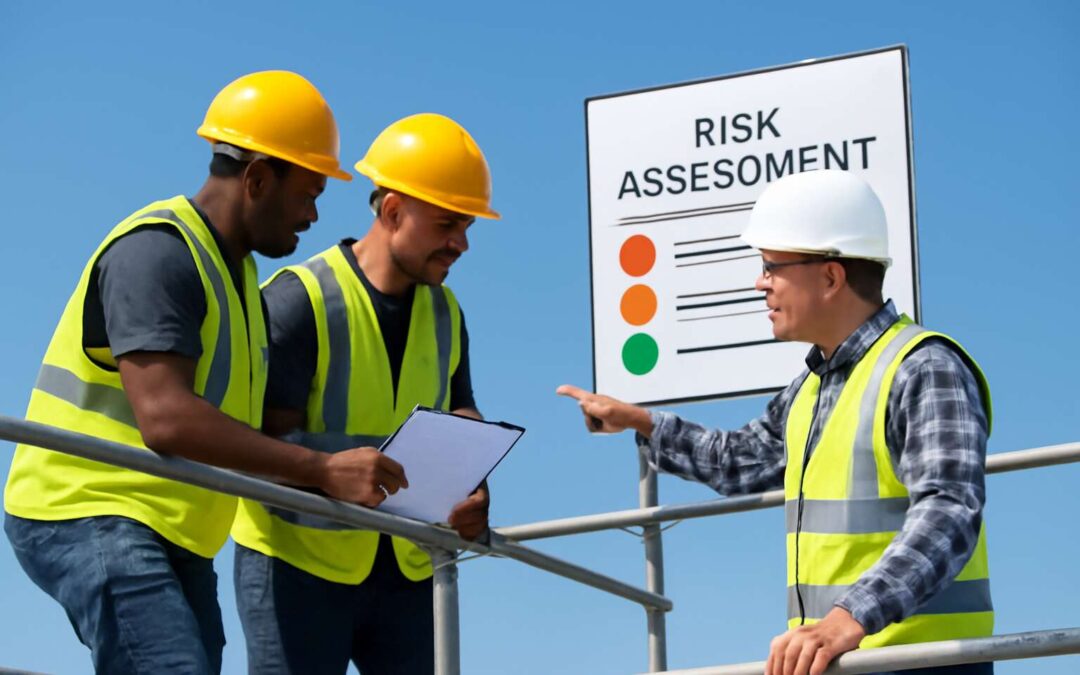
Foundations of Construction Site Safety and Health
Definition and scope of construction safety and health
“Safety isn’t expensive, it’s priceless.” On South African sites, that line isn’t a slogan—it’s the operating manual. From day one, foundations of construction site safety and health hinge on leadership, clear rules, and a culture that treats near-misses as data, not excuses!
Here are foundations you can actually rely on:
- Policy from leadership and a clear safety compass
- Hazard identification, risk assessment and controls
- Competence, training and supervision
- Communication, reporting and continuous improvement
These elements feed into the broader definition and scope of construction health and safety management, which governs workers, subcontractors, visitors, equipment, environmental hazards, and site operations.
Key regulatory drivers and standards
Safety is the language of a successful build—those who master it finish on time and on budget. On South African sites, leadership and a clear compass steer every decision, turning daily work into protection and productivity. This section highlights the regulatory engines behind it.
Key regulatory drivers and standards act like invisible welds, binding people and performance into a coherent system.
- OHSA and Construction Regulations (South Africa)
- ISO 45001 — global safety management standard
- National Building Regulations and SANS 10400
In practice, these standards shape planning, inspections and reporting, weaving a safety culture into daily operations and continuous improvement. This forms the backbone of construction health and safety management on SA projects.
Historical risk trends and modern challenges
In South Africa, a single incident can derail a project for weeks and ripple through the budget. Historically, site risk leaned heavily on falls, strikes, and equipment mishaps, reshaping how teams view safety from the ground up. Foundations of construction site safety and health are built on predictable routines, clear roles, and a culture that sees risk as a daily responsibility. This isn’t just paperwork; it’s how projects stay on track.
- Historical risk trends: dominant hazards, evolving codes, and lessons learned.
- Modern challenges: coordination across subcontractors, fatigue, mental health, and tight schedules.
- Foundational enablers: leadership, training, near-miss reporting, and visible accountability.
Together, these elements fuel a robust construction health and safety management that anchors daily decisions on site.
Roles and responsibilities in safety management
Every brick bears a choice: progress without protection or progress with purpose. “Safety is the quiet engine that keeps a project turning,” a veteran South African foreman once told me. Foundations of on-site safety emerge from clear roles, visible accountability, and a culture that treats risk as a daily duty. In construction health and safety management, leadership translates policy into practice, turning routine checks into reliable safeguards that keep projects moving and people secure.
- Project Manager: sets safety strategy, resource allocation, and accountability.
- Site Safety Officer: conducts daily checks, leads near-miss reporting.
- Site Supervisors/Foremen: enforce tasks, coach crews, verify controls.
- Subcontractors/Trade Partners: adhere to safety plans, coordinate with main contractor.
These roles knit a living safety fabric, resilient through fatigue, tight schedules, and the ever-shifting demands of South Africa’s construction landscape.
Regulatory Framework and Standards in Construction Safety
Overview of major regulations (OSHA, EU directives, local codes)
Regulatory frameworks are the backbone of construction health and safety management. They translate risk into practice, shaping what gets built and how teams operate. “Safety is a culture, not a checkbox,” and that mindset runs through audits, training, and daily decisions.
Major frameworks include:
- OSHA (Occupational Safety and Health Administration) standards and enforcement in the United States;
- EU directives and the framework directive 89/391/EEC guiding risk assessment, training, and worker participation;
- Local codes in South Africa, including the Occupational Health and Safety Act and Construction Regulations, 2014, plus SANS standards.
In practice, compliance threads into management systems, audits, and reporting, shaping how projects are planned, resourced, and reviewed to protect personnel and the bottom line.
Standards for design, procurement, and site operations
On South Africa’s construction sites, safety isn’t an afterthought—it’s wired into every decision. A quick look at risk management shows that beginning risk work in design reduces incidents and protects the project timeline. Regulatory frameworks translate risk into practice, shaping what gets built and how teams operate. This is construction health and safety management.
The framework is anchored by SA law: the Occupational Health and Safety Act and Construction Regulations guide design choices, procurement criteria, and on-site controls. Early consideration of fall protection, access, and temporary works informs every decision, while procurement channels prioritise safety performance.
- Design-stage risk controls and temporary works
- Procurement criteria prioritising safety performance
- Site operations with permits, checks, and toolbox talks
On site, the emphasis shifts to real-time compliance and culture.
Compliance documentation and audit readiness
Safety is a system that reveals itself in paperwork before a single hammer ring—an uncompromising hook for South Africa’s sites. This is the heart of construction health and safety management: regulatory frameworks translate risk into practice, shaping the forms, approvals, and reviews that keep projects moving on track.
Effective regulatory alignment rests on clear, auditable records. When teams document decisions—from design intent to on-site controls—audits become a measure of culture as well as compliance. The following elements anchor rigorous compliance documentation:
- Document control and version history
- Permits to work, toolbox talks, and daily checklists
- Supplier and third-party compliance certificates
With these in place, audit readiness evolves from a checkbox exercise to a lived discipline—embedded in how people communicate, verify, and respond to risk on the ground.
Risk Management and Hazard Control on Construction Sites
Hazard identification and reporting methods
On a South African site, one hidden hazard can rewrite a life. In construction health and safety management, risk management is a discipline, not a fear tactic, and it saves lives. A robust hazard identification culture cuts injuries when issues are addressed quickly.
Hazard control on site is not a static checklist but a living balance between task design and human vigilance. Controls must be proportional to risk and adaptable as conditions change; the responsibility carries a moral weight.
- Near-miss reporting and recording channels
- Visible hazard alerts in plain language
- Reflective reviews of incidents and lessons
Hazard identification and reporting methods hinge on psychological safety: workers must feel heard, not blamed. When listening occurs on site, near misses become teachable moments, and changes follow swiftly.
This is how discipline animates every beam and bolt.
Risk assessment techniques and prioritization
On South African construction sites, a single near-miss reported and acted on can avert a serious injury. In construction health and safety management, risk management is a discipline, not a fear tactic, and it saves lives. We see a robust risk culture making hazards visible and addressable. We see it on the ground every day!
- Job Hazard Analysis (JHA)
- What-if/checklist style reviews
- Dynamic risk assessment in the field
This approach scores risk by likelihood and consequence, guiding resources where they matter most.
Hazard control on site is a living balance between task design and human vigilance. Hierarchy of controls, proportional to risk, and adaptable as conditions shift, keeps sites safer. Near-miss reporting and reflective reviews feed the loop, while psychological safety ensures issues are spoken up, not hidden.
Engineering controls, administrative controls, and PPE
On South African sites, a single near-miss reported and acted on can avert a serious injury. In the realm of construction health and safety management, risk control is a discipline, not a fear tactic—and it saves lives. Hazards become addressable daily.
To keep hazards in check, the triad of controls guides every decision:
- Engineering controls: reshaping tasks to remove or isolate hazards, with guards, interlocks, and ventilation doing the heavy lifting.
- Administrative controls: rigorous permits-to-work, targeted training, toolbox talks, and clear procedures that standardise safe methods.
- PPE: helmets, harnesses, eye protection, and gloves that catch what the barrier can’t.
As conditions shift, the hierarchy remains a living balance between task design and human vigilance. Near-miss reporting and reflective reviews feed the loop, while psychological safety ensures issues are spoken up, not hidden.
Safe work procedures and permit-to-work systems
In South Africa, a single near-miss that is reported and acted on can avert a serious injury—a blunt arithmetic that keeps workers safe and sites productive. Risk management isn’t a scare tactic; it is the disciplined backbone of construction health and safety management, turning hazards into addressable realities that shape daily decisions and long-term trust.
Hazards are addressed through a living balance between task design and human vigilance. Safe work procedures and permit-to-work systems formalize daily routines, while reflective reviews and psychological safety ensure voices are heard, not hidden.
- Safe work procedures
- Permit-to-work systems
- Near-miss reporting and learning loops
That tension remains the pulse of every site.
Contractor and subcontractor safety management
On South African construction sites, risk management is not a party trick but a daily discipline that keeps the welds hot and the deadlines honest. When contractor and subcontractor safety management align, hazards become addressable realities rather than lurking headaches. A nimble risk intake—risk assessment, hazard spotting, and early design input—transforms power drills into precision tools and site radios into safety broadcasts. In short, construction health and safety management thrives where vigilance meets systems.
- Joint hazard registers and shared risk scoring
- Pre-task planning and dynamic re-briefs on site
- Transparent near-miss reporting loops that feed back into controls
Keep the culture curious and the controls current, and this construction health and safety management mindset becomes a natural feature of every scaffold and girder.
People, Leadership, and Safety Culture in Construction Projects
Leadership commitment and safety climate
On South African construction sites, safety begins with the people who look out for one another. When leadership shows real commitment, the safety climate becomes lived experience, not mere policy. In construction health and safety management, I’ve seen strong leadership set the tempo for every task and every trade.
People thrive when voices are welcomed and hazards are addressed openly. A culture of care grows from listening and follow-through.
- Visible, accessible leadership on site
- Fair praise and constructive feedback
- Open channels for hazard reporting
As the day ends over a SA site, safety feels less like rules and more like a shared promise. Leadership commitment and a cooperative safety culture keep teams intact, even when challenges rise. This is at the heart of construction health and safety management on our rugged SA sites.
Training, competency, and ongoing development
On South African sites, leadership that truly cares turns safety into a lived practice. As a seasoned site supervisor once quipped, “Safety isn’t a policy text—it’s the way people look out for one another.” When leaders model openness and accountability, people respond with vigilance and pride!
Training, competency, and ongoing development are the backbone of construction health and safety management on any project. A robust approach blends structured onboarding, regular refreshers, and on-site coaching to embed safe habits into daily workflows. The goal is not simply compliance but a culture where hazard reporting is welcomed and acted on.
Key elements of ongoing development include:
- Structured onboarding and competency assessment
- Mentoring, peer reviews, and performance feedback
- Regular toolbox talks and refresher modules
That is how construction health and safety management breathes on site.
Worker engagement, near-miss reporting, and feedback loops
On South African sites, leadership that genuinely cares turns safety into a lived practice. Early observations show that when leaders model openness, near-miss reporting climbs, and with it, the speed of corrective action. I’ve seen teams respond with renewed pride when safety becomes a shared gaze instead of a stand-alone policy.
People, led by accountable supervisors, engage in construction health and safety management as a collective craft. A simple rhythm—listen, reflect, adjust—creates tight feedback loops that keep hazards visible and action timely.
- Open, non-punitive near-miss reporting across all trades
- Regular, shift-spanning feedback loops that close the information gap
- Mentoring and peer recognition for safe choices and improvements
With this approach, leadership creates trust, workers feel heard, and safety becomes a shared achievement.
Implementation of Health and Safety Management Systems on Site
Plan-Do-Check-Act cycle in construction
Across a South African construction site, the Plan-Do-Check-Act cycle threads safety into daily operations. For construction health and safety management, planning aligns with site logistics, weather, and the workforce’s rhythm, turning hazard controls into practical steps that fit the day’s realities. The aim is resilience, not rigidity!
In practice, the cycle unfolds like a careful choreographing of work:
- Plan: frame objectives, controls, and responsibilities
- Do: translate plans into on-site actions
- Check: observe performance and gather data
- Act: refine practices and close gaps
On SA sites, this cadence makes audits, toolbox talks, and near-miss reporting part of the roadmap, not an afterthought. Data from checks informs adjustments to equipment, access points, and daily routines, embedding the construction health and safety management into the fabric of the project, where learning becomes a collective forecast rather than a reaction.
Incident investigation, root cause analysis, and corrective actions
Safety isn’t a checkbox—it’s the project’s heartbeat. On South African sites, every incident whispers a warning and a lesson, a signal that fuels construction health and safety management with real stories from the field. When people report, investigators chase not only what happened but why the chain bent, like a clockwork ghost seeking the true time.
Incident investigation, root cause analysis, and corrective actions are the triad that keeps the system alive.
- Immediate evidence collection and timeline reconstruction
- Root cause analysis that traces failures to system or design gaps
- Corrective actions that close gaps and preserve future integrity
On site, data from investigations feed the learning loop of construction health and safety management, turning trauma into resilience and future-proofing the project narrative.
Auditing, performance monitoring, and continuous improvement
Audits are more than paperwork on a South African site; they’re compass needles in the fog. A single well-run audit can cut near-misses by a third, turning fear into foresight and noise into signal. On the ground, construction health and safety management breathes through site teams who treat inspections as a dialogue, not a threat.
Implementation unfolds in three practical acts on site.
- Audit cadence aligned to risk profiles
- Live performance dashboards for leading and lagging indicators
- Structured management review cycles that turn data into action
Together, they stitch compliance into culture, and performance into practice.
As data flows from audits, the learning loop tightens. Corrective actions become steady, deliberate moves rather than reactive patches. This is how the project stays alive; construction health and safety management on site keeps its pulse, resilient and future-facing.
Documentation, records management, and data integrity
On a South African site, the ledger of safety is more than a file—it’s the lifeline that keeps people safe when the shuttering hums and cranes swing. In this realm of construction health and safety management, robust documentation anchors every decision, turning risk into traceable action.
Site documentation, records management, and data integrity unfold as a seamless system: controlled access, clear versioning, and routine verification ensure information remains trustworthy through permit requests, incident reviews, and daily checks.
- Policy manuals, standard operating procedures, and work methods
- Permits, checklists, and inspection logs
- Training records, competency matrices, and certificates
With these in place, teams translate plan into practice with confidence!
